Materials / Beginner guide
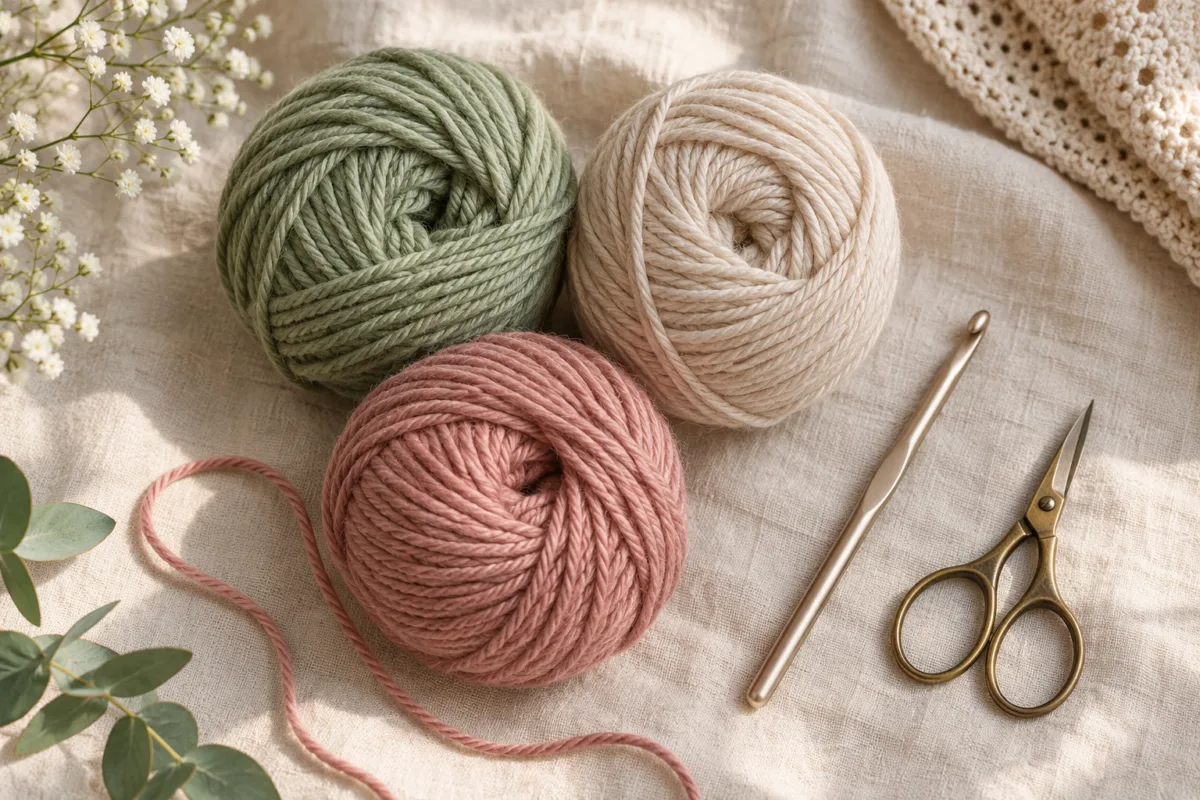
The best yarn for crochet beginners is usually a smooth, light-coloured yarn of medium thickness. It lets you see the loops, count your stitches and undo a mistake without fighting a cloud of fluff. For a first practice swatch, a simple acrylic yarn is a practical starting choice; smooth cotton can also work if you prefer a firmer feel.
You do not need to buy a large set of colours. One ball and a suitable hook are enough to find out what feels comfortable. This guide explains how to compare beginner crochet yarn by texture, thickness, fibre and label information, rather than by brand or price alone.
A quick checklist for your first yarn
- Smooth surface: individual strands and loops should be easy to recognise.
- Light, solid colour: oatmeal, pale blue or light sage makes the stitches easier to inspect than black.
- Medium thickness: a manageable starting point without tiny stitches or an oversized hook.
- Clear label: look for fibre content, yarn weight, length and care instructions.
- A modest quantity: buy for practice first, then buy the amount your chosen project actually requires.
This is a starting recommendation, not a rule for every learner. Comfort, local availability and the project matter. If you already own a suitable smooth yarn, use it before buying something new.
What yarn weight is best for crochet beginners?
Yarn weight describes thickness, not how heavy a ball feels. A 100 g ball can contain a short length of thick yarn or a much longer length of thin yarn. Do not choose a substitute from the ball weight alone.
In the Craft Yarn Council system, category 4 is called Medium and includes names such as worsted and aran. Its standard chart gives suggested hook ranges as guidelines, not fixed instructions. The actual yarn label and the pattern are more useful for selecting a starting hook for your particular yarn. See the Craft Yarn Council yarn weight reference.
For a first swatch, choose a hook near the label’s recommendation. If the resulting fabric is uncomfortably tight, first relax your grip and check that you are not pulling each loop closed. A different hook size may help, but it is not a substitute for understanding your tension.
Acrylic vs cotton vs wool: which should you choose?
| Fibre | Why consider it? | What to check |
|---|---|---|
| Acrylic | Often available in affordable, smooth options with some give. | Texture varies. Avoid very fuzzy or loosely plied versions for your first attempt. |
| Cotton | Can provide clear stitch definition and a firm fabric. | Less stretch can make a tight grip feel harder to work with. Some yarns split easily. |
| Wool | Often elastic, with useful give while forming stitches. | Check comfort against your skin and washing requirements. Not all wool tolerates machine washing. |
| Blends | Can combine different handling and care qualities. | Read the actual fibre percentages and label rather than assuming the blend behaves like one fibre. |
For basic stitch practice, the easiest yarn is the one that moves comfortably through your hands and lets you see what happened. For a finished item, choose for its intended use too: warmth, drape, durability and washing needs can change the decision.
Do not assume that any yarn is suitable for hot pads or other high-heat uses. Those projects require appropriate materials and construction; a practice swatch is not a heat-protection product.
Why smooth texture and light colours help
When you are learning, you need to see the top V of each stitch and identify where the hook belongs. Smooth yarn leaves that structure visible. A fluffy halo or chenille surface can hide it, making a missed stitch harder to find.
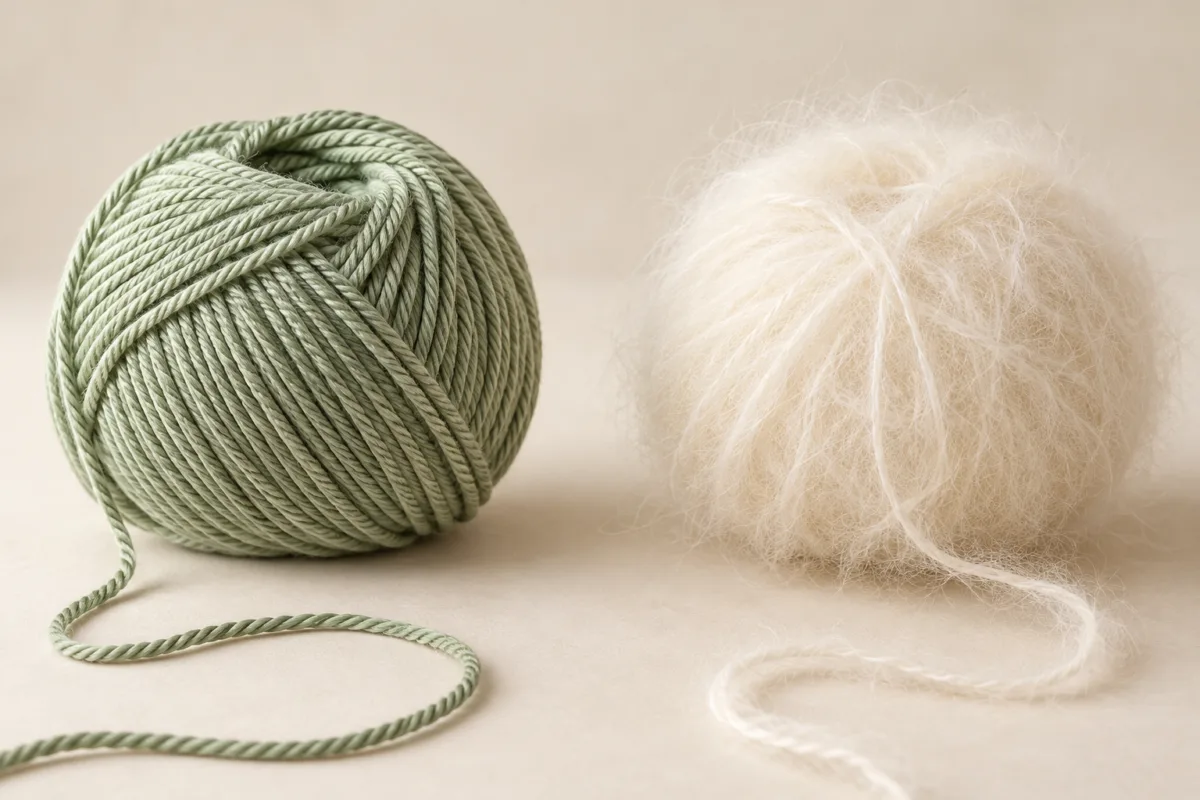
Very dark colours can also make stitch inspection difficult in ordinary indoor light. Highly variegated yarn changes colour repeatedly, which may distract from recognising the shape of the stitches. These yarns can be enjoyable later; they simply add another variable while you learn.
Look at a loose strand before buying if you can. A yarn that separates into strands easily may require more care to avoid splitting it with the hook. “Soft” and “easy to crochet” are not always the same thing.
How to read a crochet yarn label
- Check the fibre content. This tells you what the yarn is made from, not just its marketing name.
- Find the thickness category. Numbered categories and naming conventions vary between markets, so compare carefully.
- Look for a crochet hook recommendation. A knitting needle symbol is not the same as a crochet hook recommendation. Use millimetres to reduce sizing confusion.
- Compare length as well as grams. A project calls for enough usable yarn, not merely a certain number of balls.
- Read care instructions. Keep the label so you know how to wash the finished work.
- For a larger project, check the dye lot. Balls with the same colour name can differ between production batches.
Before replacing the yarn in a pattern, compare thickness, fibre, length and gauge. Two yarns sharing the same broad category can still produce different fabric.
Try a small swatch before buying more
Make a short practice rectangle using one stitch. Our beginner crochet guide includes a simple US single crochet exercise. Focus on seeing the stitches and keeping the same count across several rows.
After a few rows, ask yourself: can I identify the first and last stitch? Does the hook pass through without forcing? Can I undo a stitch without the yarn tangling? Are the loops visible in normal daylight?
If something feels difficult, change one variable at a time. Try a more relaxed grip before switching hooks; try a smoother yarn before deciding that you need an entirely new technique. Read our crochet troubleshooting tips if your edges keep changing shape.
Frequently asked questions
Is chunky yarn easier for beginners?
Larger stitches can be easier to see, but very thick yarn needs a larger hook and can feel awkward. Smooth medium-weight yarn offers a balanced starting point for many learners.
Can I learn crochet with cotton yarn?
Yes. Choose a smooth cotton and avoid pulling the loops too tight. If its firm feel makes the hook difficult to move, compare it with a smoother acrylic or a blend rather than forcing the stitches.
How much yarn do I need to start?
For learning a stitch, start with one ball rather than buying enough for a blanket. For a specific project, follow its yardage or metre requirements and account for your gauge and any changes.
Should I buy yarn before choosing a pattern?
For practice, one suitable ball is fine. For a finished project, choose the pattern first so you can match its yarn requirements, quantity and intended fabric.
Your first purchase, simplified
Choose one smooth, light-coloured yarn, check its label, and pair it with a suitable hook. Make a small swatch before committing to a larger project. Learning to recognise your stitches is more useful than collecting supplies you cannot yet compare.
Next: understand stitch names, turning chains and gauge →
Editorial note: this is general materials guidance, not a hands-on product test or brand ranking. Images are AI-generated illustrations, not photographs of tested products.